Harvey, Betty. “Making Hierarchy Out Of Nothing At All: Federal Register Data Modernization.” Presented at Balisage: The Markup Conference 2026, Washington, DC, August 3 - 7, 2026. In Proceedings of Balisage: The Markup Conference 2026. Balisage Series on Markup Technologies, vol. 31 (2026). https://doi.org/10.4242/BalisageVol31.Harvey01.
Balisage: The Markup Conference 2026 August 3 - 7, 2026
Balisage Paper: Making Hierarchy Out Of Nothing At All
Federal Register Data Modernization
Betty Harvey
As President of Electronic Commerce Connection, Inc. since 1995, Ms. Harvey
has led many federal government and commercial enterprises in planning and
executing their migration to the use of structured information for their
critical functions. She has helped develop strategic XML solutions for her
clients. Ms. Harvey has been instrumental in developing industry XML standards.
She is the co-author of "Professional ebXML Foundations" published by Wrox. Ms.
Harvey was a member of "The XML Guild" and was a coauthor of the book "Advanced
XML Applications From the Experts at The XML Guild" published by Thomson.
The Federal Register articles are received at the Government Publishing Office
(GPO) as Word files. The Word files have some in-line SGML (Standard Generalized
Markup Language) tags which get converted to plain text. An intermediate process
converts the Word file to XML with a root element with child elements <p>,
<table> and <list>.
This paper will describe my approach for creating hierachical XML out of a flat
XML file. I will talk about some of the challenges I encountered.
The production of the Federal Register is undergoing a modernization process to help
streamline the current processes. Each federal agency provides input into the Federal
Register in Microsoft Word file. A SGML Document Type Definition (DTD) was originally
developed in 1993. The original SGML DTD, with updates is still in use today in
production of the Federal Register.
As part of an overall legislative modernization effort the United States Legislature
has developed and is continuing to develop a standard XML markup language designed
to
handle all legislative material, Bill, Resolutions, Amendments, U.S. Code, Congressional
Record, Federal Register, etc. Ultimately in the future all legislative documents
will
be available in United States
Legislative Markup (USLM) format. [bharvey-uslm1]
USLM has a publically available schema and sample
documents in USLM. [bharvey-uslm2] The Federal Register is currently
being modelled in USLM but these documents aren't publically available at the time
of
this paper.
This paper will describe some of the efforts for modernization of data and processes
related to the Federal Register.
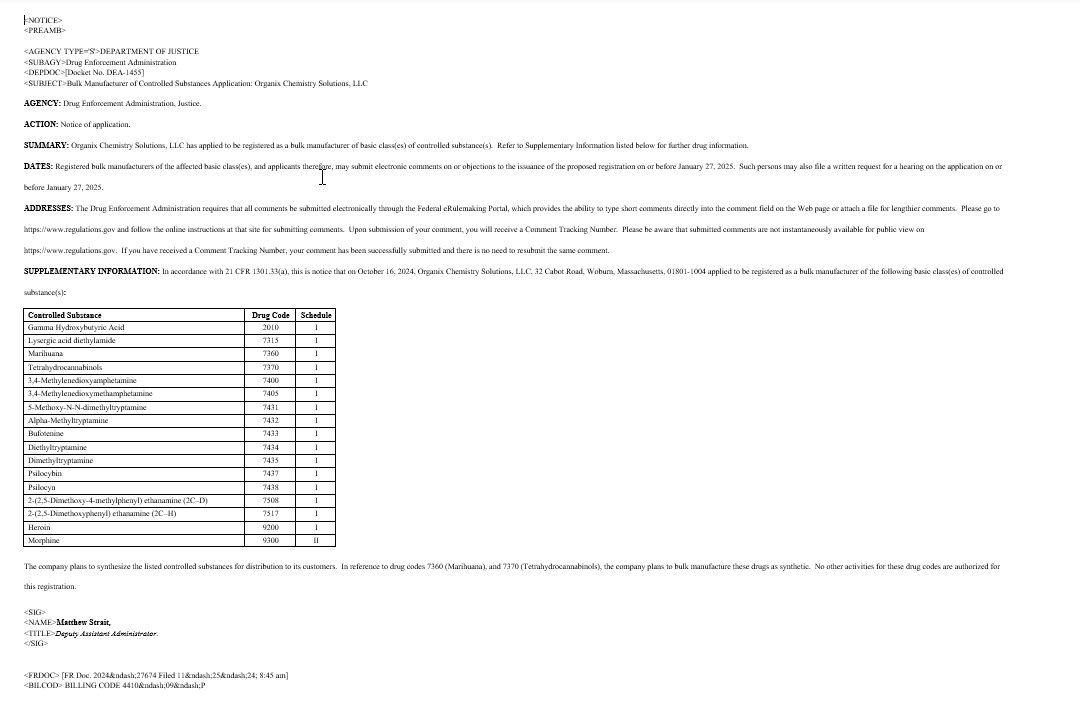
Federal Register and Microsoft® Word
Federal agencies send the Office of the Federal Register (OFR) their articles to be
included in the Federal Register in Word format. The Federal Register is published
daily. Agencies use in-line SGML tags in the Word file to identify pieces of
information. Appoximately 20% of the data contains SGML tags. In the example below
the
agency, sub-agency, department document number (<DEPDOC>), and subject have been
identified as tags. These correspond to specific information in the document.
The Federal Register has 2 major hierarchy, PREAMB (heading and metadata information)
and SUPPLEMENTARY INFORMATION. The PREAMB always has an opening tag. The SUPPLEMENTARY
INFORMATION almost never has a tag. When a tag is not available the conversion has
to
rely on heading and regular expressions to identify the structure.
The average size of the a Federal Register article is probably 10 pages or less.
However, there are some articles that are 500 or more pages.
The paragraphs with bolded headings without elements are also components in the DTD
that require tagging.
Figure 1: Example Word File
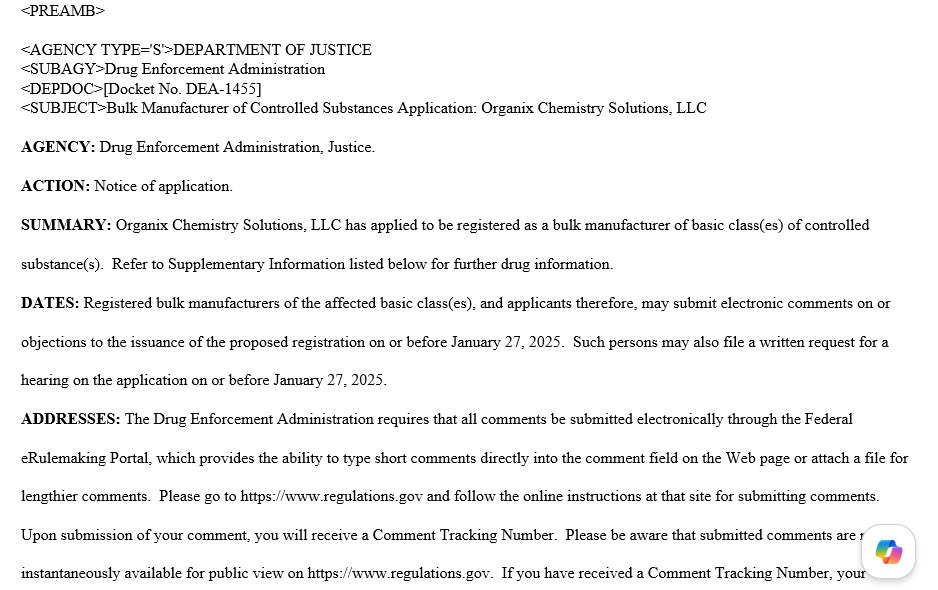
The PREAMB section has the most semantic SGML tags. The PREAMB section is highly
structured but there are variations of the types of information that is in this section.
There can also be plain paragraphs, tables and lists that don't require structural
elements. A common problem with the conversion is placing an end marker for the PREAMB
because of the variations of the data. If the end marker is missing or 2 end markers
are
output because of an unanticipated variations the structure of the whole documents
gets
skewed. Luckily as we have been working with a larger corpus of data we don't see
these
kind of problems very often.
Figure 2: Sample PREAMB Word File
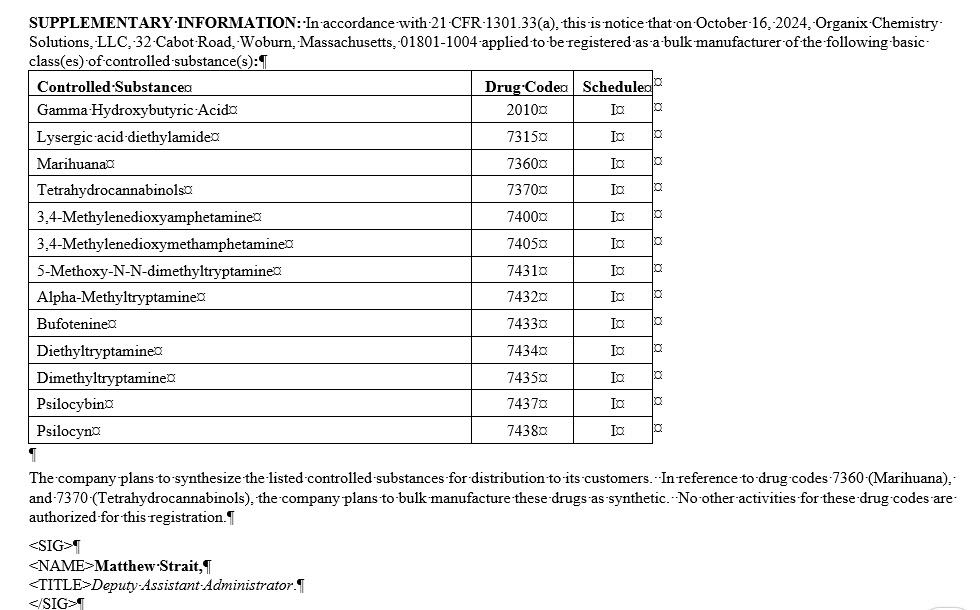
Some users will put the SGML tag <SUPPLINF> in the
Word file but we can't rely on the element being available in the file. We have also
found that the word 'SUPPLEMENTARY' can be misspelled. We have accommodated some of
the
misspelling when we find them. Most of the time the heading is uppercase but sometimes
it is camel cases (Supplemental Information:). The conversion needs to accommodate
every
variation provided by the agencies.
Figure 3: Sample SUPPLEMENTARY INFORMATION Word File
The current production process for converting the Word files is a home-grown program
called Doc2Xstyles. This program exports an SGML file from the Word document. The
OFR
staff then uses the output of the Doc2XStyles conversion to create edits.
Microsoft Word to USLM Conversion
In this section I will talk about some of the issues we had and are continuing to
have
with the Microsoft Word to USLM conversion. The challenges we experience will be similar
to any organization doing a Word Conversion to XML. One of the cool features of the
Word
.docx file is it basically a bunch of XML files contained in a zip file. These files
that have most or all the information you need to understand the document.
Unfortunately, the XML documents and structure are not always intuitive.
If you haven't actually looked at the structure of the docx file, you can unzip the
docx file and navigate the structure and files. This also true for Excel spreadsheets
and Powerpoint files.
GPO has developed a program/service to convert any Word document to USLM format -
hasn't been specifically structured toward the Federal Register. USLM schema has been
designed support any legislative document. The USLM schema is very loose. The resulting
USLM document from the Word conversion is called 'Intermediate XML'. It is designed
to
be an intermediate format that can be converted to any other document. Unfortunately
it
is basically a 'flat' file. You have a root element and a single child 'content'
element, followed by 'p', 'list' and 'table' elements. There is no hierarchy.
Internal Agency Styles
Microsoft Word allows the user to create their own styles. We see a lot of custom
styles in the Word files. Initially we had no insight into the meaning or physical
attributes of the custom styles. Each organization can use the same style name to
represent different styles. This was initially a challenge. It isn't prudent to
modify the XSLT whenever we see a new style in a document. We worked with the folks
who were doing the Word to USLM conversion to have them add a 'style' attribute and
use CSS styles for styled names.
The class attribute holds the name of the style and the
style attribute contains the style information that can be
harvested during our XML to Federal Register conversion to determine the appropriate
styles. Putting all the style information into the style
attribute allows us to parse the different components in the style to help identify
the piece of information we are trying to convert.
Figure 4: Example of 'class' and 'style' attributes
<uslm:p class="BodyA" style="line-height:24pt;font-family:Courier;color:#000000;font-size:12pt;text-decoration-color:#000000;">
<uslm:span style="font-family:Times New Roman;font-weight:bold;color:black;"
><PART><HED>PART </uslm:span>
<uslm:span style="font-family:Times New Roman;font-weight:bold;color:black;"> 431—STATE
ORGANIZATION AND GENERAL ADMINISTRATION</uslm:span>
<uslm:span style="font-family:Times New Roman;color:black;"> </uslm:span>
</uslm:p>
Word Style Nuances
Everytime an individual mouse clicks in a Word file, Word makes a <w:r> element. The w:r element contains a fair amount of information, including text.
When a user creates bolded text Word puts the bold information into the file. If the
person decides "I don't want this bolded" and unbolds the data, Word keeps the
original w:r but turns the bold off.
The listing below shows text that was bolded but then turned off. The XML
statement in the /w:p/w:pPr/w:rPr/w:b tells Word to
bold the text in the w:t element "Cumulative Across
MYs 1978". However the case below the attribute w:val='0'
which states ignore the bold. If the value was "1" then the text would be bolded.
The original Word to USLM conversion was styling (bold, italic and underscore) even
when the value was turned off. The user will occasionally use color but the Federal
Register doesn't allow color so it is ignored in the conversion. The Intermediate
XML filw will still maintain color information.
Initially we were also missing tabs from the original Word to USLM conversion.
Tabs can sometimes (not always) give you clues on the type of data. Federal
Register has several paragraph elements (P, FP#) which indicate how the paragraph
is
formatted in the Federal Register. The w:tab
element is now converted to a tab character.
Figure 6 below shows an example of the beginning of the
Intermediate USLM XML file.
Figure 6: Snippet of the Intermediate XML File
<uslm:document xmlns:uslm="http://schemas.gpo.gov/xml/uslm"
xmlns:xhtml="http://www.w3.org/1999/xhtml">
<uslm:meta/>
<uslm:content>
<uslm:p class="Normal">
<uslm:span><NOTICE></uslm:span>
<uslm:span/>
</uslm:p>
<uslm:p class="Normal" style="padding-bottom:10pt;line-height:13pt;text-align:left;">
<uslm:span><PREAMB></uslm:span>
<uslm:span/>
</uslm:p>
<uslm:p class="Normal" style="padding-bottom:0pt;line-height:12pt;text-align:right;"/>
<uslm:p class="Normal" style="padding-bottom:0pt;line-height:24pt;">
<uslm:span style="font-family:Times New Roman;font-weight:bold;font-size:12pt;"
><AGENCY TYPE='S'></uslm:span>
<uslm:span style="font-family:Times New Roman;font-weight:bold;font-size:12pt;"
>DEPARTMENT OF COMMERCE</uslm:span>
</uslm:p>
<uslm:p class="Normal" style="padding-bottom:0pt;line-height:24pt;">
<uslm:span style="font-family:Times New Roman;font-weight:bold;font-size:12pt;"
><SUBAGY>
<uslm:span style="font-family:Times New Roman;font-weight:bold;font-size:12pt;">
</uslm:span>
<uslm:span style="font-family:Times New Roman;font-weight:bold;font-size:12pt;"
>International Trade Administration</uslm:span>
</uslm:p>
<uslm:p class="Normal" style="padding-bottom:0pt;line-height:24pt;">
<uslm:span style="font-family:Times New Roman;font-weight:bold;font-size:12pt;"
><DEPDOC>[</uslm:span>
<uslm:span style="font-family:Times New Roman;font-weight:bold;font-size:12pt;"
>C-</uslm:span>
<uslm:span style="font-family:Times New Roman;font-weight:bold;font-size:12pt;"
>469</uslm:span>
<uslm:span style="font-family:Times New Roman;font-weight:bold;font-size:12pt;"
>-8</uslm:span>
<uslm:span style="font-family:Times New Roman;font-weight:bold;font-size:12pt;"
>18</uslm:span>
<uslm:span style="font-family:Times New Roman;font-weight:bold;font-size:12pt;"
>]</uslm:span>
</uslm:p>
<uslm:p class="Normal" style="padding-bottom:0pt;line-height:24pt;">
<uslm:span style="font-family:Times New Roman;font-weight:bold;font-size:12pt;"
><SUBJECT></uslm:span>
<uslm:span style="font-family:Times New Roman;font-weight:bold;font-size:12pt;">Ripe
Olives from Spain: Preliminary </uslm:span>
<uslm:span style="font-family:Times New Roman;font-weight:bold;font-size:12pt;"
>Results</uslm:span>
<uslm:span style="font-family:Times New Roman;font-weight:bold;font-size:12pt;"> of
Countervailing Duty </uslm:span>
<uslm:span style="font-family:Times New Roman;font-weight:bold;font-size:12pt;"
>Administrative Review</uslm:span>
<uslm:span style="font-family:Times New Roman;font-weight:bold;font-size:12pt;"> </uslm:span>
<uslm:span style="font-family:Times New Roman;font-weight:bold;font-size:12pt;">and </uslm:span>
<uslm:span style="font-family:Times New Roman;font-weight:bold;font-size:12pt;">Partial </uslm:span>
<uslm:span style="font-family:Times New Roman;font-weight:bold;font-size:12pt;"
>Rescission of </uslm:span>
<uslm:span style="font-family:Times New Roman;font-weight:bold;font-size:12pt;"
>Review</uslm:span>
<uslm:span style="font-family:Times New Roman;font-weight:bold;font-size:12pt;">;
2022</uslm:span>
</uslm:p>
The Intermediate XML file has the same issues that any Word file has when you are
converting to XML. Every click that a user makes in a Word file results in
underlying tagging. The file has a lot of noise that has to be
filtered out. Notice how many uslm:span are in the
above figure for a single paragraph. Each span
element represents a single 'w:r' structure in the Word file. I have found single
paragraphs that have hundreds of spanelements.
We have had our challenges with the conversion from Word to a flat USLM XML
document.
Different Document Types
The Federal Register contains multiple document
types. Each type of document has variations in what elements are allowed and order
of
elements. The document types are:
NOTICE: Informs the public about federal
agency actions, including meetings, investigations, and funding availability.
There are different types of notices and data can be handled differently
depending on the type of notice and/or the agency it came from.
PRORULE: The PRORULE is a proposed rule. It provides a plan to create, amend,
or repeal a regulation. There is usually a comment period provided for the
public to comment on the rule.
RULE: The RULE provides information on a new or amended federal
regulation.
PRESDOC: The PRESDOC is a presidential document. This is an official
document issued by the President of the United States. This document types has
subtypes of documents
Executive Orders:Official
documents issued by the President to manage operations of the
federal government.
Proclamations:Signed documents
that typically relate to ceremonial matters, national
observances, or trade matters.
Presidential
Memorandums:Directives that may be published in the
Federal Register.
Determinations: Official
decisions by the President.
Administrative Orders:
Notices, letters, and other miscellaneous orders.
Reorganization Plans: Plans
submitted to Congress for restructuring executive agencies.
Conversion Processes
In this section I am going to describe the conversion process and some of the thought
processes that were used to get the correct hierarchy.
Identification of the Information
As you can see in Figure 6 the USLM file is very verbose. The first
step is to identify as many components as possible during the first pass of the
data. The following tasks are performed during the first pass at the file.
Assign id's to paragraphs.
Identify all the styles as possible. For example, "
<uslm:span style="font-family:Times New
Roman;font-weight:bold;font-size:12pt;" >Administrative
Review</uslm:span>" gets converted to <b>Administrative
Review</b>
Identify the elements and add them to an <element> tag. This isn't always possible in the first
pass because the elements can span across multiple span elements. The
element tag will be deleted when the
structures are created.
When the information is identifiable, add a 'class' attribute that will
help in creating correct structures.
Where possible, add a <marker>
element. I will describe it's use later in this paper.
During the first pass it was impossible to merge all the like elements (bold,
italic, underline, etc.) because of the different variations of the span styles
because of spacing, font styles, etc. The second phase of the conversion merges all
the adjacent like tagging into a single tag. All adjacent bold, italic and
underscore elements get combined into a single element.
Figure 8: Results After Merging Formatting Elements
After the merge there can be elements that didn't get identified because they
spanned mulitple uslm:span elements and they weren't identifiable until after the
merge happened. Elements are identified as starting with an < and ending with
a > entity. This process can also be flawed because often both < and
> are used in the same paragraph as content.We had to modify our initial
REGEX because we were occasionally picking up paragraph data and assigning it the
<element> tag.
During this phase we identify the heirarchical structure. We use an element called
<marker> with a class
and id attributes to determine the beginning an end of the
structure. These elements are the building blocks for actually structuring the
hierarchy in following processes. We try to identify hierarchical structure in phase
1 but it is not always possible because of the multiple span elements.
The end marker has a rid or
'reference identifier' for the beginning marker.
The conversion has many steps. Low level hierarchies are created first. We are
following the USLM schema but have deviated by adding the <marker> element. The conversion calls a template that picks up
all the elements inside the class="beginPREAMB" and
class="endPREAMB".
The class attribute and the id of the
beginning marker and the reference id (rid) are used to guide
the conversion into creating the following <content> heirarchy.
The next step after creating the <content>
hierarchy is to removes the original content between the 2 marker elements. If
this step isn't completed then duplicate text will be included in the file.
During the last stage of process after all the lower-level content elements have been created we have the following
markup:
Figure 12: Final PREAMB Structure
<PREAMB>
      <AGENCY>DEPARTMENT OF COMMERCE</AGENCY>
      <SUBAGY>International Trade Administration</SUBAGY>
      <DEPDOC>[C-469-818]</DEPDOC>
      <SUBJECT>Ripe Olives from Spain: Preliminary Results of Countervailing Duty Administrative Review and Partial Rescission of Review; 2022</SUBJECT>
      <AGY>
         <HED>AGENCY:</HED>
         <P>Enforcement and Compliance, International Trade Administration, Department of Commerce.</P>
      </AGY>
. . .
</PREAMB>
Lower Level Structures
Each structure in the lower-level structures have their own challenges. Below
is an example of a pretty easy structure called <ANNEX>. In this case we got
luck because there is a begin and end element. You will also notice in this
example the user also put in <P> tages which are unnecessary. I will use
this section to walk through the conversion:
Figure 13: Raw Intermediate XML
<uslm:p class="Normal">
<uslm:span><ANNEX><HED>ANNEX</HED></uslm:span>
</uslm:p>
<uslm:p class="Normal">
<uslm:span> <P>1. Antonio José Benavides Torres [Commander of the Central Integral
Strategic Defense Region of the National Armed Forces, former Director of Operations
for the National Guard; born June 13, 1961] </P></uslm:span>
</uslm:p>
<uslm:p class="Normal">
<uslm:span> <P>2. Gustavo Enrique González López [Director General of the National
Intelligence Service and President of the Strategic Center of Security and
Protection of the Homeland; born November 2, 1960]</P></uslm:span>
</uslm:p>
<uslm:p class="Normal">
<uslm:span> <P>3. Justo José Noguera Pietri [President of the Venezuelan
Corporation of Guayana, </uslm:span>
<uslm:span>former General Commander of the National Guard; born March 15, 1961]
</P></uslm:span>
</uslm:p>
<uslm:p class="Normal">
<uslm:span> <P>4. Katherine Nayarith Haringhton Padron [National Level Prosecutor
of the 20th District Office of the Public Ministry; born December 5, 1971]
</P></uslm:span>
</uslm:p>
<uslm:p class="Normal">
<uslm:span> <P>5. Manuel Eduardo Pérez Urdaneta [Director of the National Police;
born May 26, 1962] </P></uslm:span>
</uslm:p>
<uslm:p class="Normal">
<uslm:span> <P>6. Manuel Gregorio Bernal Martínez [Chief of the 31st Armored
Brigade of Caracas, former Director General of the National Intelligence Service;
born July 12, 1965] </P></uslm:span>
</uslm:p>
<uslm:p class="Normal">
<uslm:span> <P>7. Miguel Alcides Vivas Landino [Inspector General of the National
Armed Forces, former Commander of the Andes Integral Strategic Defense Region of the
National Armed Forces; born July 8, 1961] </P></uslm:span>
</uslm:p>
<uslm:p class="Normal">
<uslm:span></ANNEX></uslm:span>
</uslm:p>
This is the structure of the ANNEX before it gets converted to hierarchy. You
will see a begin marker and an end marker. Later we will walk through the code
to convert it to a hierarchy element.
Figure 14: ANNEX Before Hierarchy
<marker class="beginANNEX" id="beginANNEX-d29e759"/>
<heading>ANNEX</heading>
<p class="Normal" id="Default-pp22-d244e278"> 1. Antonio José Benavides Torres [Commander of the Central Integral Strategic Defense Region of the National Armed Forces, former Director of Operations for the National Guard; born June 13, 1961] <element location="end">P</element></p>
<p class="Normal" id="Default-pp22-d244e281"> 2. Gustavo Enrique González López [Director General of the National Intelligence Service and President of the Strategic Center of Security and Protection of the Homeland; born November 2, 1960]<element location="end">P</element></p>
<p class="Normal" id="Default-pp22-d244e283"> 3. Justo José Noguera Pietri [President of the Venezuelan Corporation of Guayana, former General Commander of the National Guard; born March 15, 1961] <element location="end">P</element></p>
<p class="Normal" id="Default-pp22-d244e285"> 4. Katherine Nayarith Haringhton Padron [National Level Prosecutor of the 20th District Office of the Public Ministry; born December 5, 1971] <element location="end">P</element></p>
<p class="Normal" id="Default-pp22-d244e287"> 5. Manuel Eduardo Pérez Urdaneta [Director of the National Police; born May 26, 1962] <element location="end">P</element></p>
<p class="Normal" id="Default-pp22-d244e289"> 6. Manuel Gregorio Bernal Martínez [Chief of the 31st Armored Brigade of Caracas, former Director General of the National Intelligence Service; born July 12, 1965] <element location="end">P</element></p>
<p class="Normal" id="Default-pp22-d244e291"> 7. Miguel Alcides Vivas Landino [Inspector General of the National Armed Forces, former Commander of the Andes Integral Strategic Defense Region of the National Armed Forces; born July 8, 1961] <element location="end">P</element></p>
<marker class="endANNEX" id="endANNEX-d29e777" rid="beginANNEX-d29e759"/>
Now let's walk through the code to make the ANNEX hierarchy.
Each phase of the conversion relies on using modes. The use of modes ensures that we don't get any
unexpected output during each phase.
Every mode has a default template for the elements that are not included in
the creation of the heirarchy
Figure 15: Default 'element' Template
    <xsl:template match="element()" mode="createANNEX" >
        <xsl:variable name="el-name" select="name()"/>
        <xsl:variable name="ANNEX-id" select="preceding-sibling::marker[1][@class = 'beginANNEX']/@id"/>
        <xsl:choose>
           <!--Remove ANNEX internal content-->
            <xsl:when test="preceding-sibling::marker[@class='beginANNEX'][@id = $ANNEX-id] and
                following-sibling::marker[@class = 'endANNEX'][@rid = $ANNEX-id]">
            </xsl:when>
          <!--Output content that isn't included in the ANNEX-->
          <xsl:otherwise>
                <xsl:element name="{$el-name}">
                    <xsl:copy-of select="@*"/>
                    <xsl:apply-templates mode="createANNEX"/>
                </xsl:element>
            </xsl:otherwise>
        </xsl:choose>
    </xsl:template>
The ANNEX is a very simple structure so the beginANNEX marker creates a
content with a class attribute. The
class attribute is used in the final conversion to
create the Federal Register structure.
 <content class="ANNEX" id="beginANNEX-d29e759">
        <heading>ANNEX</heading>
        <p class="Normal" id="Default-pp22-d244e278"> 1. Antonio José Benavides Torres [Commander of the Central Integral Strategic Defense Region of the National Armed Forces, former Director of Operations for the National Guard; born June 13, 1961] <element location="end">P</element>
                  </p>
        <p class="Normal" id="Default-pp22-d244e281"> 2. Gustavo Enrique González López [Director General of the National Intelligence Service and President of the Strategic Center of Security and Protection of the Homeland; born November 2, 1960]<element location="end">P</element>
        </p>
        <p class="Normal" id="Default-pp22-d244e283"> 3. Justo José Noguera Pietri [President of the Venezuelan Corporation of Guayana, former General Commander of the National Guard; born March 15, 1961] <element location="end">P</element>
        </p>
        <p class="Normal" id="Default-pp22-d244e285"> 4. Katherine Nayarith Haringhton Padron [National Level Prosecutor of the 20th District Office of the Public Ministry; born December 5, 1971] <element location="end">P</element>
        </p>
        <p class="Normal" id="Default-pp22-d244e287"> 5. Manuel Eduardo Pérez Urdaneta [Director of the National Police; born May 26, 1962] <element location="end">P</element>
        </p>
        <p class="Normal" id="Default-pp22-d244e289"> 6. Manuel Gregorio Bernal Martínez [Chief of the 31st Armored Brigade of Caracas, former Director General of the National Intelligence Service; born July 12, 1965] <element location="end">P</element>
        </p>
        <p class="Normal" id="Default-pp22-d244e291"> 7. Miguel Alcides Vivas Landino [Inspector General of the National Armed Forces, former Commander of the Andes Integral Strategic Defense Region of the National Armed Forces; born July 8, 1961] <element location="end">P</element>
        </p>
 </content>
This structure will go through one more conversion to make it valid according
to the Federal Register schema. This is the final ANNEX structure.
Figure 19: Final ANNEX Structure
<ANNEX>
    <HED>ANNEX</HED>
    <P>1. Antonio José Benavides Torres [Commander of the Central Integral Strategic Defense Region of the National Armed Forces, former Director of Operations for the National Guard; born June 13, 1961] </P>
    <P>2. Gustavo Enrique González López [Director General of the National Intelligence Service and President of the Strategic Center of Security and Protection of the Homeland; born November 2, 1960]</P>
    <P>3. Justo José Noguera Pietri [President of the Venezuelan Corporation of Guayana, former General Commander of the National Guard; born March 15, 1961] </P>
    <P>4. Katherine Nayarith Haringhton Padron [National Level Prosecutor of the 20th District Office of the Public Ministry; born December 5, 1971] </P>
    <P>5. Manuel Eduardo Pérez Urdaneta [Director of the National Police; born May 26, 1962] </P>
    <P>6. Manuel Gregorio Bernal Martínez [Chief of the 31st Armored Brigade of Caracas, former Director General of the National Intelligence Service; born July 12, 1965] </P>
    <P>7. Miguel Alcides Vivas Landino [Inspector General of the National Armed Forces, former Commander of the Andes Integral Strategic Defense Region of the National Armed Forces; born July 8, 1961] </P>
</ANNEX>
Complicated Structures (<REGTEXT>
The most complicated structure that we have to deal with in
regulatory text. This structure allows repeating
structures for:
The REGTEXT element has 2 attributes that are
required in the output.
Figure 20: Word Begin REGTEXT
<REGTEXT TITLE='12' PART='1041'>
<PART><HED>PART 1041—PAYDAY, VEHICLE TITLE,
AND CERTAIN HIGH-COST INSTALLMENT LOANS
After the first process where content is identified and the
like 'span' elements are merged the following structure
is created to identify the attributes associated with the REGTEXT elements. This process should be straight-forward but
because of the variances between how organizations provide data there are
multiple paths that need to be created. Creating a <metadata> element ensures that the data is normalized before
the final output is created. This particular example of a <REGTEXT> section is over 1500 pages long with thousands of
lower-level structures.
GPO has their own publishing system called Microcomp. Microcomphas been used
for the last 40+ years. The modernization process wants to move away from Microcomp
to another publishing system. However, until that happens we still have to convert
the table into a format that Microcomp can consume. GPO has its own table model
which is drastically different from either HTML or OASIS-Open (nee CALS) table
model.
In our conversion process we have to support the following table models:
Word Table Model
HTML Table Model. The Word table model
gets converted to HTML table model during the Word to IXML
conversion.
GPO Table. Currently the GPO table model
gets converted from the HTML table model during the conversion to the
Federal Register XML.
OASIS-Open (CALS) Table Model. The CALS
table model will be used by the new publishing engine.
In the XSLT conversion we have a parameter that tells the conversion whether to
convert to the GPO table model or the CALS table model. The attributes in the
GPOTABLE element tells Microcomp the typography
of the table.
Figure 22: GPO Table Model Example
<GPOTABLE CDEF="s50,xs40" COLS="3" OPTS="L2,tp0,p7,7/8,i1">
    <TTITLE>Table Title</TTITLE>
    <BOXHD> <!--Equivalent to 'thead'-->
       <CHED H="1">First Column Head</CHED>
       <CHED H="1">Second Column Head</CHED>
       <CHED H="1">Second Column Head</CHED>
    </BOXHD>
    <ROW>
       <ENT>First body column</ENT>
       <ENT>Second body column</ENT>
       <ENT>Third body column</ENT>
    </ROW>
</GPOTABLE>
Problems Encountered
The Word document is created by individuals in hundreds of agencies. People come,
people go, processes change. Tweaking the conversion process is a never-ending process
because we are always encountering variations on how individuals construct the Word
document. Any organization that embarks on a Word to XML conversion project will hit
many of the pitfalls that we have encountered in this process.
Misspellings and Phrase Variations
The conversion relies mostly on creating the hierarchy by headings and/or phrases
in the text. For example, one of the top level sections is called SUPPLINF relies on a heading "SUPPLEMENTARY INFORMATION:" in the text. We have encountered
multiple variations of spelling "SUPPLEMENTARY", i.e., "SUPPLEMENTAL".
The majority of the Federal Register files identify the SUPPLEMENTARY INFORMATION: either as a bolded paragraph or a styled
heading. Occasionally the heading will be included in the first paragraph of the
section and we will need to parse the text to determine the beginning of the section
and create a <marker> marker element.
We have also encountered case differences: "Supplementary Information".
Determining the Levels of Heading
We caught a break because the Federal Register schema does not enforce hierarchy
in what is considered standard structural sections of most documents. We only need
to identify the heading and the level of heading. The Federal Register has 3 levels
of heading: HD1, HD2 and HD3. The heading element
HED is usually reserved for the first heading
in a semantic structure.
The Word files are all over the place with how headings are identified. Most of
the time they are just regular paragraphs with formatting (italic, bold or
underline). There are roman numeral, alphabetic, numbered and unnumbered headings.
The order in which the heading appears in the file after the <SUPPLINF> section
determines the level of heading. For example, a "I. " could be a <HD1> in one document or a <HD2> in another document. The conversion is required to parse
the document and make heading determinations.
There are so many rules that have been created to determine what constitutes a
heading and what doesn't. Sometimes the Word file will have standard Word heading
styles attached. However, you can't rely on the heading style. The conversion has
to
rely on context , as well as ending punctuation. Normally, if the text ends in a
period, semi-colon, colon or question mark it is not a heading.
Figure 23: Example 1 of Heading levels
HD1 - Bolded Text
...
I. HD2 - Upper-case Roman Numeral
...
A. HD3 - Upper-case Letter
...
1. HD3 - numbered text
Figure 24: Example 2 of Heading levels
I. HD1 - Upper-case Roman Numeral
...
B.  This is considered a paragraph.
...
A. HD2 - Upper-case Letter
...
1. HD3 - numbered text
The heading issue gets even stickier because you need to determine whether
lettered or numbered text is actually a list rather than headers. We have built
rules to determine an actual list from headers.
Line Breaks vs. Carriage Returns
In Word if you type a Shift + Enter you will get
a linefeed (break) instead of a new paragraph. There are some editors who will use
a linefeed instead of a straight Enter because they
don't want the extra space in front the paragraph. The problem is that in reality
the text is actually a new paragraph and in the initial conversion from Word to
Intermediate XML the text comes out as one long paragraph with
<br/> elements in the text.
The conversion has to parse the <br/> elements and create
individual paragraphs and/or semantic elements). It is impossible to determine
where the <br/> will occur in the text.
Figure 25: Actual Example of Paragraph With Breaks
<uslm:p>
<uslm:span><AGENCY TYPE='S'></uslm:span>
<uslm:span>ENVIRONMENTAL PROTECTION AGENCY</uslm:span>
<uslm:span><uslm:br/></uslm:span>
<uslm:span><DEPDOC>[</uslm:span>
<uslm:span>FRL OP-OFA-192]</uslm:span>
<uslm:span><uslm:br/></uslm:span>
<uslm:span><SUBJECT></uslm:span>
<uslm:span>Environmental Impact Statements; Notice of Availability</uslm:span>
<uslm:span>;</uslm:span>
<uslm:span><uslm:br/>Responsible Agency: Office of Federal Activities,
General Information 202-564-5632 or </uslm:span>
<uslm:span>https://www.epa.gov/nepa.</uslm:span>
<uslm:span><uslm:br/></uslm:span>
<uslm:span>Weekly receipt of Environmental Impact Statements (EIS)</uslm:span>
<uslm:span><uslm:br/>Filed August 11, 2025 10 a.m. EST Through
August 18, 2025 10 a.m. EST</uslm:span>
<uslm:span><uslm:br/>Pursuant to CEQ Guidance on 42
USC 4332.</uslm:span>
<uslm:span><uslm:br/>Notice: Section 309(a) of the
Clean Air Act requires that EPA make public its comments on EISs issued by other
Federal agencies. EPA's comment letters on EISs are available at:
https://cdxapps.epa.gov/cdx-enepa-II/public/action/eis/search.</uslm:span>
<uslm:span><uslm:br/>EIS No. 20250118, Draft, FEMA,
OR,</uslm:span>
<uslm:span><uslm:br/>Oregon Implementation Plan for
National Floo</uslm:span>
<uslm:span>d Insurance Program - Endangered Species
Act Integration, </uslm:span>
<uslm:span><uslm:br/>Comment Period Ends:
10/06/2025,</uslm:span>
<uslm:span><uslm:br/>Contact: Pxxxx Rxxx ###-###-###.</uslm:span>
<uslm:span><uslm:br/>EIS No. 20250119, Draft, USFWS, HI,</uslm:span>
<uslm:span><uslm:br/>Kauai Island Utility Cooperative Habitat Conservation Plan, </uslm:span>
<uslm:span><uslm:br/>Comment Period Ends: 10/21/2025,</uslm:span>
<uslm:span><uslm:br/>Contact: Kxx Mxxxxxx ###-###-####.</uslm:span>
<uslm:span><uslm:br/>EIS No. 20250120, Final, BLM, WY,</uslm:span>
<uslm:span><uslm:br/>West Antelope III Coal Lease Application, </uslm:span>
<uslm:span><uslm:br/></uslm:span>
<uslm:span>Review Period Ends: 09/22/2025,</uslm:span>
<uslm:span><uslm:br/>Contact: Axxxxx Exxx ###-###-####.</uslm:span>
<uslm:span><uslm:br/></uslm:span>
</uslm:p>
The process of breaking content into paragraphs cannot be done until the file is
cleaned up and the <span> elements are merged.
Also, unique id's are added to the <br>
elements. The id's are used to parse through the data.
Figure 26: Paragraph After Merging and ID's Added
<p class="AGENCY" id="AGENCY4-d29e12">
         <element location="start">AGENCY TYPE='S'</element>
         <b>ENVIRONMENTAL PROTECTION AGENCY</b>
         <br id="br-p2-d29e17"/>
         <element location="start">DEPDOC</element>[<b>FRL OP-OFA-192]</b>
         <br id="br-p2-d29e23"/>
         <element location="start">SUBJECT</element>
         <b>Environmental Impact Statements; Notice of Availability;Responsible Agency: Office of
            Federal Activities, General Information 202-564-5632 or https://www.epa.gov/nepa.</b>
         <br id="br-p2-d29e37"/>Weekly receipt of Environmental Impact Statements
        (EIS)<br id="br-p1-d29e42"/>Filed August 11, 2025 10 a.m. EST Through August 18, 2025 10 a.m.
            EST<br id="br-p1-d29e45"/>Pursuant to CEQ Guidance on 42 USC 4332.<br id="br-p1-d29e48"
         />Notice: Section 309(a) of the Clean Air Act requires that EPA make public its comments on
         EISs issued by other Federal agencies. EPA's comment letters on EISs are available at:
            https://cdxapps.epa.gov/cdx-enepa-II/public/action/eis/search.<br id="br-p1-d29e51"/>EIS
         No. 20250118, Draft, FEMA, OR,<br id="br-p1-d29e54"/>Oregon Implementation Plan for
         National Flood Insurance Program - Endangered Species Act Integration, <br
            id="br-p1-d29e59"/>Comment Period Ends: 10/06/2025,<br id="br-p1-d29e62"/>Contact:
         Pxxxxx Rxxx ###-###-###.<br id="br-p1-d29e65"/>EIS No. 20250119, Draft, USFWS, HI,<br
            id="br-p1-d29e69"/>Kauai Island Utility Cooperative Habitat Conservation Plan, <br
            id="br-p1-d29e72"/>Comment Period Ends: 10/21/2025,<br id="br-p1-d29e75"/>Contact: Kxx
         Mxxxxxx ###-###-###.<br id="br-p1-d29e78"/>EIS No. 20250120, Final, BLM, WY,<br
            id="br-p1-d29e81"/>West Antelope III Coal Lease Application, <br id="br-p2-d29e83"
         />Review Period Ends: 09/22/2025,<br id="br-p1-d29e88"/>Contact: Axxxxx Exxxx
         ###-###-###.</p>
Below is example code that is being used to parse a paragraph with breaks. The
templates CreateParaBeforeMarkers and CreateParaAfterMarkers create the markers for creating
the hierarchy.
There are multiple stages between creating the paragraphs and the final output.
Below is the resulting output from the single paragraph with <br/> elements.
Figure 28: After Conversion
<AGENCY>ENVIRONMENTAL PROTECTION AGENCY</AGENCY>
<DEPDOC>[FRL OP-OFA-192] </DEPDOC>
<SUBJECT>Environmental Impact Statements; Notice of Availability;Responsible Agency: Office of Federal Activities, General Information 202-564-5632 or https://www.epa.gov/nepa. </SUBJECT>
<P>Weekly receipt of Environmental Impact Statements (EIS)</P>
<P>Filed August 11, 2025 10 a.m. EST Through August 18, 2025 10 a.m. EST</P>
<P>Pursuant to CEQ Guidance on 42 USC 4332.</P>
<P>Notice: Section 309(a) of the Clean Air Act requires that EPA make public its comments on EISs issued by other Federal agencies. EPA's comment letters on EISs are available at: https://cdxapps.epa.gov/cdx-enepa-II/public/action/eis/search.</P>
<P>EIS No. 20250118, Draft, FEMA, OR,</P>
<P>Oregon Implementation Plan for National Flood Insurance Program - Endangered Species Act Integration, </P>
<P>Comment Period Ends: 10/06/2025,</P>
<P>Contact: Portia Ross 425-487-4713.</P>
<P>EIS No. 20250119, Draft, USFWS, HI,</P>
<P>Kauai Island Utility Cooperative Habitat Conservation Plan, </P>
<P>Comment Period Ends: 10/21/2025,</P>
<P>Contact: Koa Matsuoka 808-210-6295.</P>
<P>EIS No. 20250120, Final, BLM, WY,</P>
<P>West Antelope III Coal Lease Application, </P>
<P>Review Period Ends: 09/22/2025,</P>
<P>Contact: Alfred Elser 307-775-6146.</P>
Table Issues
We have encountered several issues when converting Word tables to XML content.
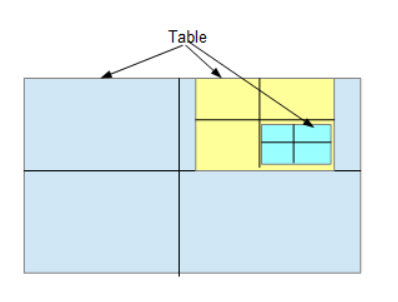
Tables Within Tables
Word allows tables within tables. In fact the original CALS model allowed
tables within tables. In practice I haven't seen anyone actually use tables
within tables in SGML or XML. Some organizations talked about it in theory but
I don't personally know of an organization that actually implemented it.
We have encountered several documents which had tables within tables. The
hierarchy of the tables are sometimes 4 levels deep.
Figure 29: Table Within Tables
Intermediate XML converts the Word table to HTML tables. HTML tables also
allow tables within tables. The GPO and CALS table model does not allow tables
within a table.
This wasn't an easy problem to solve and we really haven't completely solved
it. Until we can come up with a valid approach we have unwrapped the table
structure when a table is within a cell. This isn't ideal but it is a
semi-reasonable solution until we can find a better mechanism. Luckily we
haven't encountered too many of these tables.
Table Headings and Table Notes
All table headings and table notes are created outside the table in the Word
file. The conversion is required to pick up the table head and place it in the
<TTITLE> element for GPO tables or <title> element for CALS. The table
title is relatively easy if the preceding sibling of the table starts with
"Table #.". However, this isn't always
case. We need to evaluate the preceding sibling(s) - yes sometimes there are 2
paragraphs - and place the text in the appropriate element, then remove the
paragraph from its original location.
The same goes for table notes. GPO table model has a child element called
TNOTE. The conversion iterates through the
following siblings that start with "(a)" or "a." or "1." and creates the TNOTE
or <tfoot> constructs. It then removes the paragraphs from the original
location.
Word Style Differences
We cannot change or modify how the Word files are constructed by the various
organizations. We must take what we get and process the files. As a result, each
organization uses their own template or no template. Some have created their own
named styles in the Word file. We are able to capture the name of the style but are
not able (currently) to determine what that named style actually means. We are
looking into the possibility of pulling the style information for a named style into
the Intermediate XML file.
Figure 30: Real Example of Word Named Style
<w:rStyle w:val="dewidow"/>
The w:val attribute gets turned into a
class attribute during the Word to Intermediate XML
conversion. We are able to manually go into the Word XML file and find the
'style.xml' file to determine how to process this information. However, this is
always a one-off process and only done when we encounter a difference in the
formatting from the Word to the XML.
Hopefully we will be able to capture the style from named styles in the Word file
to the Intermediate XML file.
We have also found that the 'standard' (using this term loosely) Word styles are
not consistently formatted in the same way across organizations. A good example of
this is the standard 'Emphasis' style in Word. Normally, the Emphasis style is
italics. We have found instances where an organization and/or user has modified the
standard Emphasis to mean 'bold' or no style.
Once we can get all the style information included in the Intermediate XML file
some of the issues we have encountered will go away.
Word Style Nuances
A problem that we encountered in the Intermediate XML file which has been
solved is 'ghost' styles. Everytime a user clicks in a Word file something
happens. A user may create italicized or bolded text then change their mind. The
style attributes are still included in the underlying Word XML. Initially, the
unhighlighted text was being included as highlighted in the Intermediate
XML.
We were able to get the Word to Intermediate XML conversion modified to not
include the highlighting based on the w:val attribute in
the Word file.
Figure 31
Word XML Encoding
<w:i/>           <!--Italicized Text-->
<w:i w:val="0"/> <!--Text Not Italicized-->


<w:b/>           <!--Bolded Text-->
<w:b w:val="0"/> <!--Text Not Bold-->
Text Manipulation
We now have subject-matter experts reviewing and commenting on the converted
files. They have been making requests for enhancing the text manipulation of the
actual text in the file. Where possible we are trying to accommodate their requests.
Here are a few requests that we have received and implemented.
Move punctuation outside of formatting (italics, and bold) except for
phrases such as 'i.e.,', 'et al.,', etc.
Add italic tags to all URL's and email addresses.
Another critical part of the conversion is removing the SGML elements from the
file. Identifying the elements early in the process makes this relatively easy.
However, there are occasions where and element will not get identified because of
some anomaly in the file and we have to make adjustments to the XSLT.
Validation Efforts
A preliminary authoring environment in Oxygen has been created by Joel Kalvesmaki.
Joel has done an incredable job of creating an environment that enhances the
authoring/editing process for the users. The user experience thus far has been
excellent. A pipeline has been created that takes a Word file and passes it along
to a
service that converts the Word to USLM XML. The Word to USLM file is provided to the
user which can then be converted to the Federal Register XML format. There are also
postprocess scripts that looks at the file and does some clean up GPO protocol.
There is a SGML Document Type Definition (DTD) has been available for the Federal
Register for decades. A RelaxNG schema as been developed that relies on the structure
of the original Federal Register DTD makes some dramatic enhances. The schema allows
both GPO tables and OASIS-Open tables. Currently GPO publishes the Federal Register
using the GPO table model. However, in the future the OASIS-Open table model will
be
used.
The RelaxNG schema gets converted to an XML Schema that is used internally in
Oxygen.
Anyone who has worked with Oxygen knows that it flags any parsing errors against a
schema. Schematron rules are being developed to provide further validation of GPO
rules, i.e., title casing, punctuation, etc.
Conclusion
I am sure there are many ways to approach the problem of creating XML hierarchy from
flat files. This is just our approach. Even while I was writing this paper I found
a few
places where we could make the code more efficient. When we first embarked on this
project we were given only a few sample files. These files were NOTICE files which
are
simplist files are normally only several pages long.
However, as we started receiving more document types and more complex documents we
found that we were dealing with a much harder problem than we anticipated. If I could
go
back to the beginning knowing what I know now I might have done a few things
differently.